The Eye Direct
The Eye Direct
The Device That Turned Our Interview Into a Conversation
There is a moment in documentary filmmaking that every filmmaker chases. It's when the subject stops performing for the camera and simply talks to you. Really talks to you. The Interrotron was built for exactly that moment.
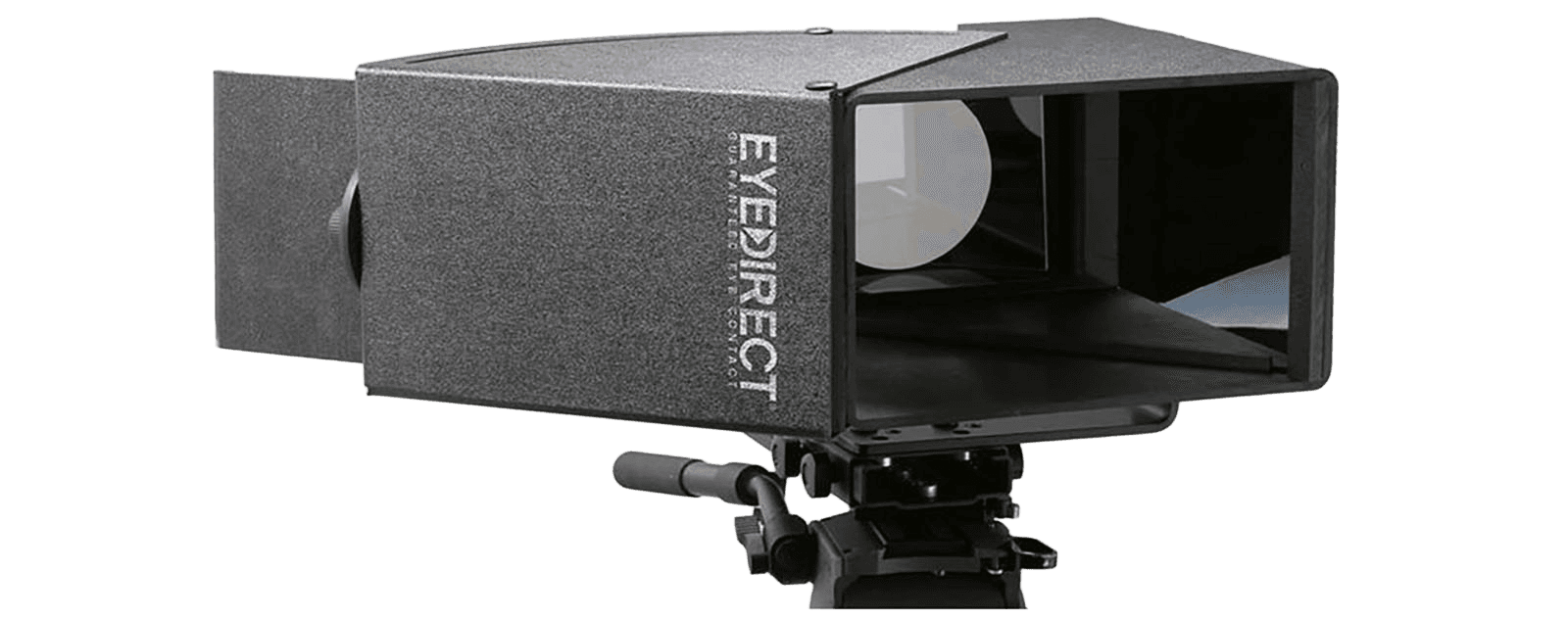
The device was invented by documentary filmmaker Errol Morris in the early 1990s. His problem was simple: in a traditional interview setup, the subject looks at the interviewer sitting beside the camera, which means they are always looking slightly past the lens. The audience never got true eye contact. Morris solved this with a beam splitter, a half-silvered mirror mounted in front of the lens that reflects the interviewer's face directly over the camera: the subject looks at the interviewer, the camera sees the subject looking straight back at the audience. Eye contact, achieved.
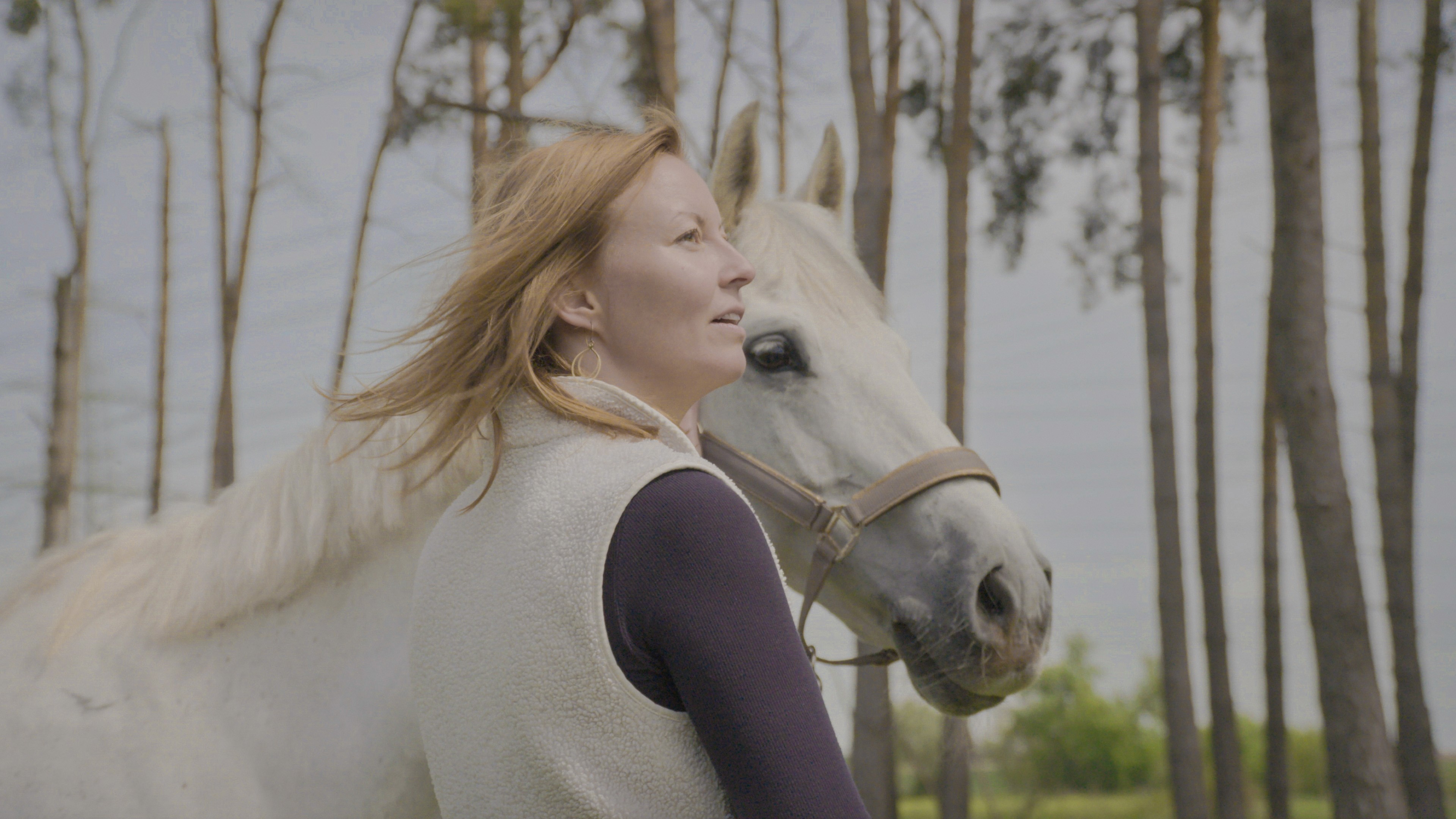
When we were planning Open Heart, our portrait of energy healer Katrin, we knew from day one that this technique was the right choice. Katrin's story is deeply personal and the whole film is built around her voice and presence. We wanted the audience to feel spoken to, not observed. And the way YouTube and video culture has shifted things helps too. Viewers today are far more used to someone talking directly into camera. It no longer feels strange or confrontational, it feels like a conversation.
In practice, we rented the Eye Direct (EyeDirect Mark II) - the more accessible sibling of the Interrotron. Same principle, beam splitter mounted in front of the lens, same intimate result, but more widely available for indie productions and considerably easier on the budget. If the Interrotron is the original, the Eye Direct is what most independent filmmakers will actually get their hands on.
But getting our hands on it was the easy part.
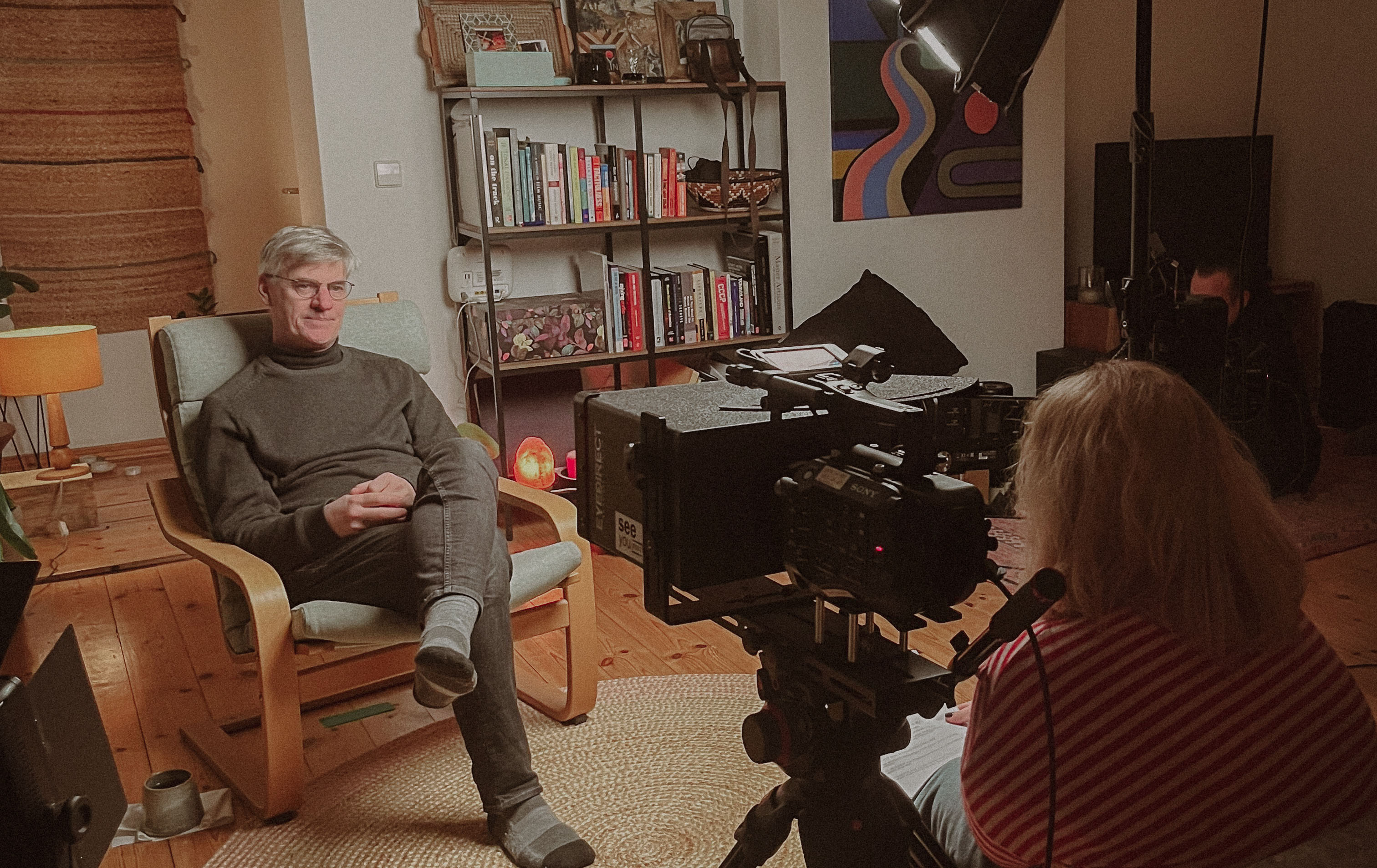
It arrived in pieces. It took three of us and one YouTube tutorial to figure out how to assemble it, and we will not pretend the logic of it was immediately obvious. We stood around it for a while, consulted the video more than once. But then, once it was assembled, mounting it in front of the camera took about ten minutes and felt completely straightforward. Done.
On the shoot day, it was worth every minute of confusion. Katrin took to it immediately. Since she could see us in the mirror and we could see her, it genuinely felt like a conversation rather than an interview. After a minute or two, neither of us were thinking about the setup anymore. The device disappeared and what was left was just two people talking. Which is exactly the point.
So, if you are shooting a documentary portrait and want your subject to truly connect with the viewer, the Eye Direct is worth exploring. Just maybe watch the assembly video before the shoot day.
our works